

Currently Empty: $0
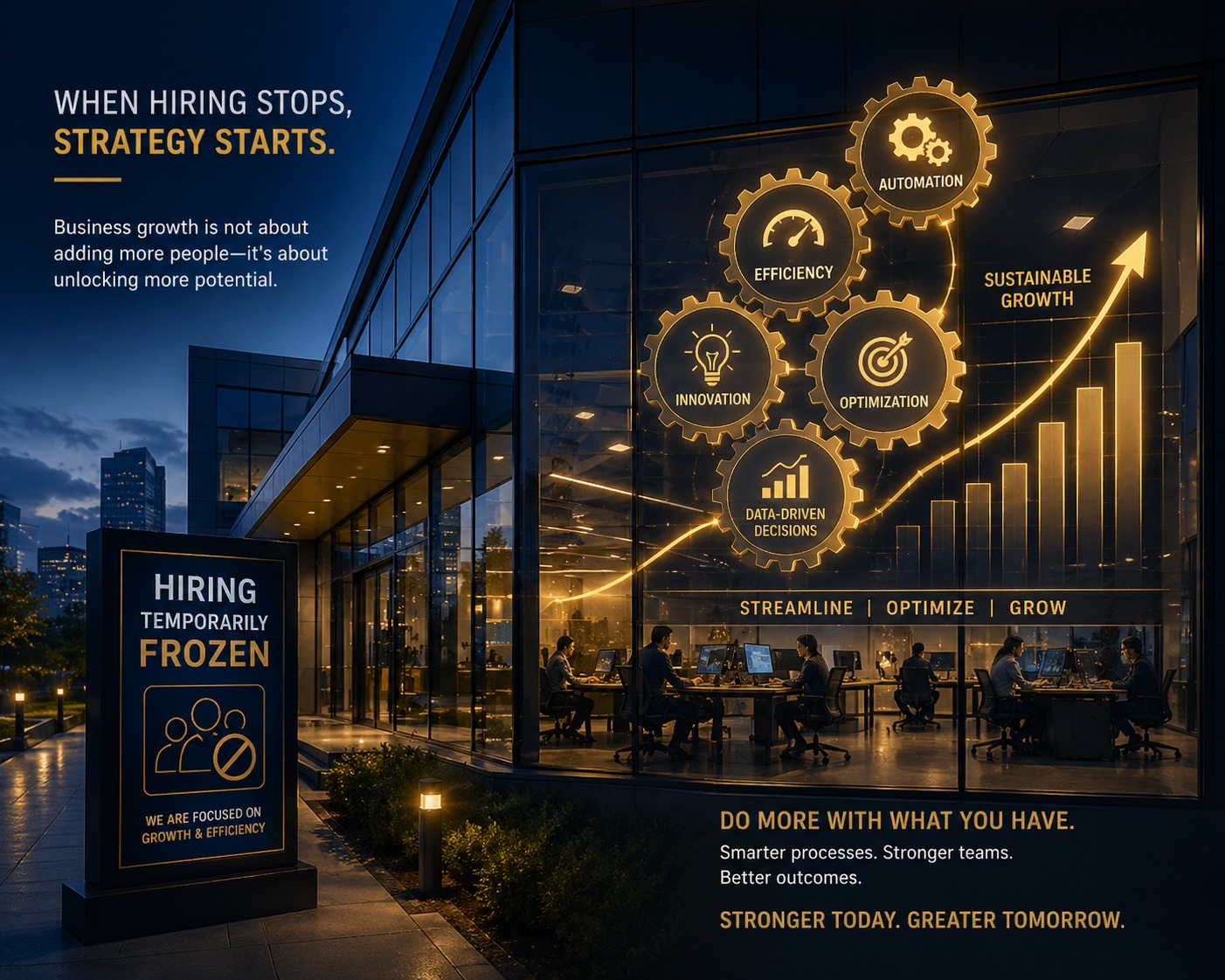
Global WFM brings out the latest update on how the industry is doing. Across North America, Europe, and Asia, more organisations are pausing external hiring as they navigate inflation, uneven GDP growth, AI disruption and geopolitical uncertainty. Instead of expanding headcount, leaders are expected to “do more with less” while still protecting innovation, customer experience and long‑term competitiveness.
A hiring freeze is typically triggered to protect cash flow and margins, but its hidden risks are structural: stalled capability building, rising burnout, weakened succession pipelines and missed market opportunities. The real challenge for CXOs is to convert a headcount pause into a period of strategic redesign—reshaping the workforce mix, unlocking internal talent and using technology and global models to sustain growth.
Key risks leaders must manage
When unplanned or poorly managed, hiring freezes create second‑order effects that are often more damaging than the original business slowdown.
- Productivity and innovation drag: Workloads increase but capacity does not, leading to re‑prioritisation, project delays and a bias towards short‑term “run the business” activities over transformation.
- Talent erosion: High performers shoulder more work, accelerating fatigue and attrition; meanwhile, the employer brand suffers when candidates see offers paused or withdrawn.
- Capability gaps: Critical skills in AI, data, cybersecurity and digital operations are difficult to “pause” because competitors continue to invest—even through downturns.
- Global inequity in opportunity: Emerging markets that rely heavily on multinational hiring—India, Southeast Asia, Eastern Europe, Latin America—face uncertainty in campus hiring and lateral demand when global companies freeze roles centrally.
Leaders who acknowledge these dynamics early can design counter‑moves that protect both financial resilience and the organisation’s future talent base.
From headcount freeze to workforce strategy reset
Rather than treating a freeze as a passive pause, leading companies are using it as an inflection point to rethink how work is organised and where skills come from.
1. Redesign work before redeploying people
A freeze is the ideal moment to ask: “If we were setting this function up today, would we design it the same way?”
- Map critical value streams and customer journeys; identify work that is high‑value, specialised or legally mandated to stay in‑house versus work that can be automated or externalised.
- Simplify legacy processes, remove duplicated approvals and rationalise meetings, freeing capacity before asking teams to absorb more work.
- Use this exercise to build a skills‑based view of demand rather than a role‑based view—an essential step in moving towards internal marketplaces and agile staffing.
2. Make internal mobility the first source of talent
With external hiring slowed, global firms are investing heavily in internal marketplaces, upskilling and redeployment to fill critical roles.
- Studies show that systematic upskilling and reskilling programmes have increased internal mobility by up to 30% and cut hiring costs by as much as 92%.
- Build a skills inventory and mobility charter that allows employees to move laterally across businesses and geographies without bureaucratic friction.
- Redeploy recruiters and HRBPs from external sourcing to internal career coaching, succession mapping and workforce planning.
Global lenses: how regions navigate freezes differently
Different geographies experience freezes through different macro and labour‑market realities.
| Region / Market | Typical hiring-freeze triggers | Constraints & opportunities | Strategic moves that sustain growth |
| North America | Earnings pressure, high wage inflation, tech and financial‑services corrections. | Mature remote‑work infrastructure, deep gig and contractor ecosystem, strong union presence in some sectors. | Aggressive automation and AI adoption, selective hiring for “mission‑critical” skills, expanded use of contractors and acqui‑hires. |
| Europe | Energy prices, regulatory uncertainty, slower GDP growth, restructuring in manufacturing and public sector. | Strong worker protections can make layoffs harder; cross‑border mobility within EU remains an advantage. | Cross‑training, redeployment across markets, nearshoring to lower‑cost EU members, shared‑services and centres of excellence. |
| Asia–Pacific | Export volatility, funding winter for startups, global clients pausing offshoring decisions. | Large graduate workforce, wage arbitrage still attractive, but dependent on global demand. | Campus hiring calibrated but not abandoned, focus on domain and digital upskilling, expansion into new APAC markets and “follow‑the‑sun” delivery. |
| Latin America & Emerging EMEA | Currency volatility, political risk, dependence on global commodity cycles. | Strong potential as alternative nearshore/outsourcing hubs; growing digital talent pools. | Use Employer‑of‑Record (EOR) and global employment platforms to tap talent without large fixed investments; build bilingual, multi‑time‑zone delivery teams. |
This global view reinforces that a hiring freeze is less about “stopping growth” and more about rebalancing where and how work gets done.
Five strategic levers to unlock growth during a freeze
1. Cross‑training and workforce agility
Cross‑training employees across adjacent roles—operations and analytics, sales support and customer success, HR and workforce planning—creates elasticity in capacity and protects critical processes.
- Develop a skills matrix that links employees to potential stretch roles; blend formal learning with on‑the‑job rotations.
- Incentivise participation through career credits, recognition and access to future roles once the freeze is lifted.
2. Technology, AI and automation as headcount multipliers
AI and automation are no longer “nice to have” efficiency plays; amid freezes they become essential to sustain growth.
- Prioritise automation of repetitive, rules‑based tasks in finance, HR, contact centres and operations; this releases capacity for innovation and complex work.
- Use AI‑driven analytics for demand forecasting, scheduling and workforce planning, so that existing staff are deployed where they create maximum value.
- Build a joint roadmap where cost savings from automation are partially reinvested into strategic skills and innovation.
3. Flexible workforce models and global talent
When permanent headcount growth is constrained, flexible models—contingent workers, gig talent, EOR arrangements and global teams—offer a way to access skills without long‑term fixed costs.
- Use Employer‑of‑Record partners to test new markets or stand up specialist teams without creating legal entities.
- Collaborate with ecosystems of partners, startups and outsourcing providers instead of attempting to own every capability in‑house.
4. Protecting morale, culture and employer brand
The human impact of a freeze is often underestimated; anxiety spreads when employees see growth plans stall.
- Communicate the rationale, expected duration and principles (e.g., no replacements vs selective exceptions) with transparency.
- Offer wellbeing support, realistic workload planning and recognition programmes; link cross‑training and internal gigs to career narratives, not just “extra work.”
- Continue to invest in early talent and diversity pipelines where possible; even small cohorts can signal long‑term commitment to inclusion and growth.
5. Design the post‑freeze acceleration now
The most resilient organisations treat a freeze as a planning runway for the next growth wave.
- Build scenario‑based hiring plans aligned to demand triggers—new product launches, geographic expansion, major deals—so that recruiting can restart quickly and strategically.
- Refresh your Employee Value Proposition and candidate experience to ensure that when the market turns, you can re‑engage talent pools who may have been paused.
- Track leading indicators (productivity, innovation backlog, customer metrics) to decide when the cost of staying frozen exceeds the cost of investing in new talent.
Conclusion: Freezing headcount, not ambition
Globally, hiring freezes are likely to remain part of the leadership toolkit as organisations face AI disruption, macro volatility and shareholder pressure. But organisations that treat them purely as a defensive cost measure risk undermining capability, culture and future competitiveness.
By using this period to redesign work, activate internal talent, embrace flexible global models and invest in technology, leaders can freeze hiring without freezing growth—emerging leaner, more skilled and better positioned for the next cycle of opportunity.
Source: GWFM Research & Study